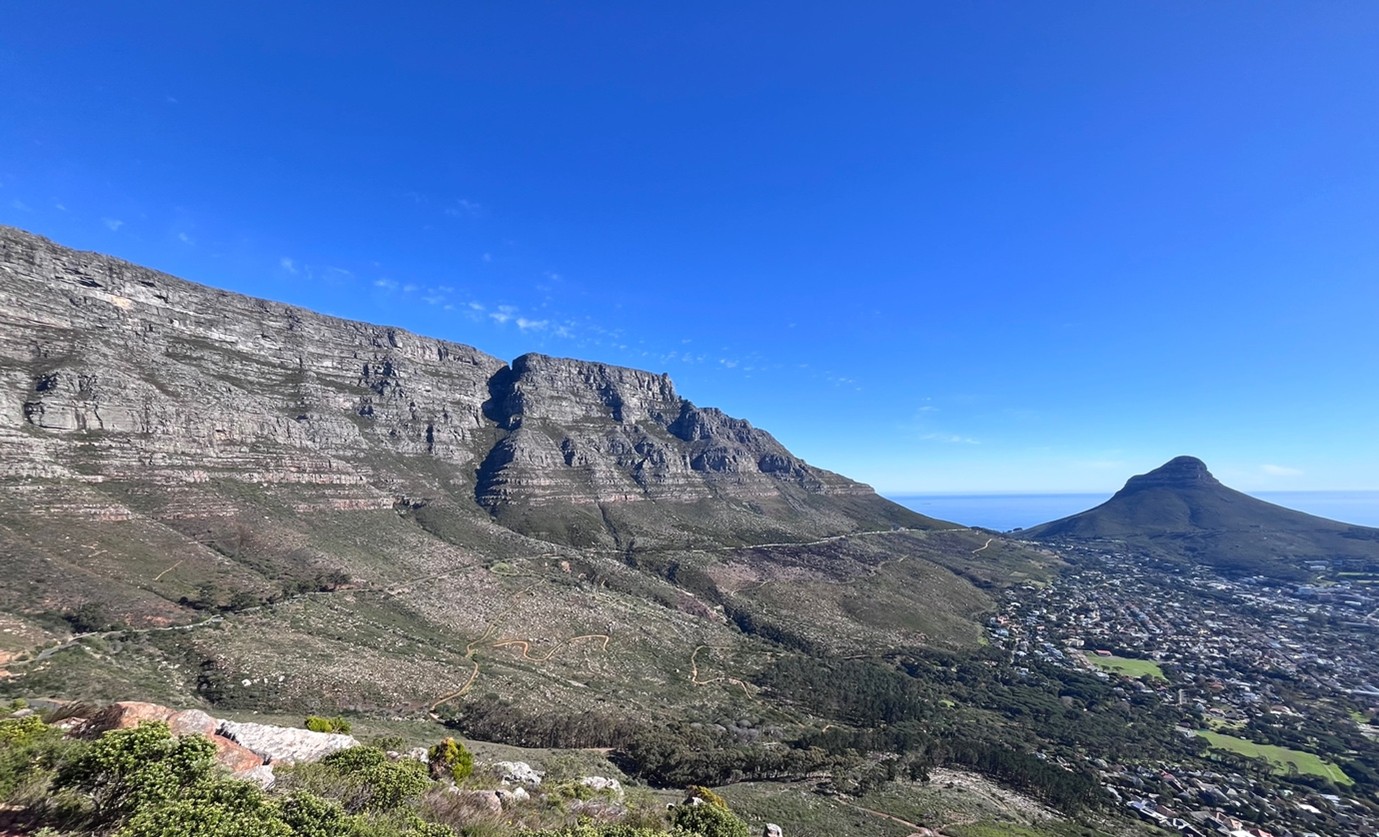
Same Mountain. Different Perspective.
The Value of Independence
Let’s be honest.
Most of us have, at some point, been in a relationship we thought was absolutely perfect. We couldn’t see a single fault. Everything made sense. We were blinded and certain.
Meanwhile, those closest to us had… let’s call them… reservations.
But we didn’t see it. Or perhaps (read probably) we chose not to.
Because when you’re inside something, when you’re emotionally invested, clarity is surprisingly difficult to access. It’s only later, with a bit of distance, that it all becomes obvious. The signs were there, the behaviours were there, but we just couldn’t see them at the time. Not surprisingly.
The thing is, that dynamic isn’t unique to relationships.
It pops up everywhere, especially in the decisions that matter most. Because proximity changes how we see things.
There’s that old saying about the mechanic and his car? It’s usually the one you see broken down on the side of the highway! Not because he doesn’t know what he’s doing, but because he’s too close, too busy, too involved to step back and apply the same thinking to himself as he does for his paying clients.
I was reminded of this recently.
I was sitting with two fairly big decisions at the same time. Both important, both needing proper thought. And I could feel it, I simply wasn’t approaching them with the same clarity I bring to my clients.
Eventually I had to stop, quite literally, make a cup of tea and sit myself down.
“Geneé… if you were a client of your own, what would you do?”
And the answer, in both cases, was different to what I was actually doing.
In one instance in particular, it was immediate, clear, uncomplicated and honestly a complete no-brainer, but from the outside.
I was venting to Jess as a sounding board (poor child as the dachshunds weren’t being much help) and she said something to me in that moment that stuck:
“Mom… what would Confiance do? Put your Confiance hat on.”
And just like that, it clicked.
Nothing had changed. Not the facts or the options, but just where I was looking at it from. It actually reminded me of something so simple, something I couldn’t believe I hadn’t seen.
Living in Cape Town, you see Table Mountain all the time. I walk and drive past and around it virtually daily, but it never quite looks the same. From the city, from the southern suburbs, from out at sea, in different weather. It shifts. The edges soften, or maybe they sharpen. The mountain hasn’t changed. My position has.
And that’s really the point. It’s not that we don’t know what to do. It’s that we’re not neutral when it’s our decision. Yes of course, we’re hopeful, cautious, trying to avoid regret, but most times we’re just trying to stay in control. Sometimes, if we’re honest, we’re even just trying to prove to ourselves that we can.
And all of that creeps in quietly. What feels like logic is often just emotion, very well explained. Warren Buffett once said that the most important quality for an investor is temperament, not intellect. This is spot on. You see it outside of finance all the time.
Think about relationships again. The person you’re dating, the one who feels completely right while your friends and family are a little less convinced. From the inside, it makes perfect sense and from the outside… not always, but still, it’s incredibly difficult to access that outside view while you’re in it. Not because you’re unaware. Just because you’re too close and sometimes that proximity blinds you.
I see a version of this play out often in my world too.
A friend of mine, thoughtful and detail-oriented, was involved in a personal property transaction. She wanted to be careful, to protect herself properly and so she spent time adding clauses, tightening things up, covering every angle. Basically, playing let’s moonlight as the lawyer I think I am (her words, not mine!). It felt responsible, sensible, but the outcome was the opposite.
The added complexity created ambiguity. This led to disagreement, and eventually litigation. Her intention was pure – her aim simply protection, but the result was friction.
That’s the paradox.
When we’re close to something, we tend to do more, think more, add more, analyse more, control more. But clarity doesn’t usually come from more. It comes from stepping back, but this has become harder.
The problem often is that we have more information than ever before, more tools, opinions and more ways to feel informed. So suddenly we think that we are experts at everything. Combine that with a world that has become more complex.
So the need for independent thinking, I’m talking proper real, no-bullshit objectivity, has become more important, not less. Strip out the noise. Focus on the facts.
You see it clearly in structures.
In South Africa, trusts are under increasing pressure to prove they are genuinely independent. Where they start to look like extensions, or alter egos, of the individuals behind them, their effectiveness starts to fall away. Offshore, this has always been understood. Independence isn’t a nice-to-have. It’s built in and without it, the structure doesn’t hold.
The same applies to investing.
There’s nothing wrong with being involved, learning and having a view. You can even have a bit of fun with it. But there’s a difference between money you can play with and money that carries consequence. The portion that underpins your and your family’s future, the part that really matters, needs a level of discipline and objectivity that’s difficult to maintain when you’re both emotionally and financially invested.
And then there’s property.
On paper, it sounds straightforward. Collect rent, manage maintenance, keep things running, rinse, repeat, but in reality, it’s conversations, boundaries, late payments, negotiations, complaints, and expectations.
When you’re personally involved, those moments carry weight. They become emotional. Decisions become harder to make cleanly and with clarity. An independent party doesn’t automatically take away responsibility, but it does take away friction. And often, that gives you something far more valuable than efficiency.
It gives you space, the space to focus on your work, your family and to live your best life.
So why do people hesitate? It’s not because they don’t see the value, but because of the perceived cost. It feels expensive to bring in expertise, to get independent input and to give away control. And yes, on the surface, it may well be. But we don’t apply that same thinking everywhere else.
You wouldn’t try to fit your own pacemaker. You probably wouldn’t represent yourself in a complex legal matter. But yet, when it comes to financial decisions, which are often just as complex, just less visible, and affect your family’s future, we’re far more comfortable going it alone.
Sometimes, the greatest cost isn’t the decision itself. It’s deciding to do it on your own, and then only realising the cost later. We see it in property, investments, structuring and increasingly, even in how we approach our health. We’re more informed than ever with Google, Claude, ChatGPT, endless information at our fingertips. But information is not the same as perspective. At some point, the better move isn’t to search more. It is to sit across from someone independent and ask:
“What am I not seeing?”
Independence, in this context, isn’t really about who you take advice from.
It’s about whether the thinking itself is free. Free from pressure. Free from bias. Free from urgency. Free from the need to be right. It’s the ability to look at something as it is, not as you hope it will be or fear it might become. To separate the decision from the emotion attached to it and create just enough distance to see clearly.
Often that’s all that’s required. Not more information. Not more effort. Simply a different lens. Most people don’t make poor decisions because they lack intelligence. They make them because they’re standing too close to see clearly.
Clarity rarely comes from thinking harder. It comes from stepping back. Removing the noise. Simplifying and organising.
And just to be clear, this isn’t a call to go and reassess every relationship in your life because your father, mother, best friend has a view. Because then we may be dealing with a whole different kind of advice, and that would definitely need to be independent!
But it is a reminder. When you’re very close to something. Pause. Step back. Shift your vantage point. Reset.
You might be surprised by what becomes obvious.